
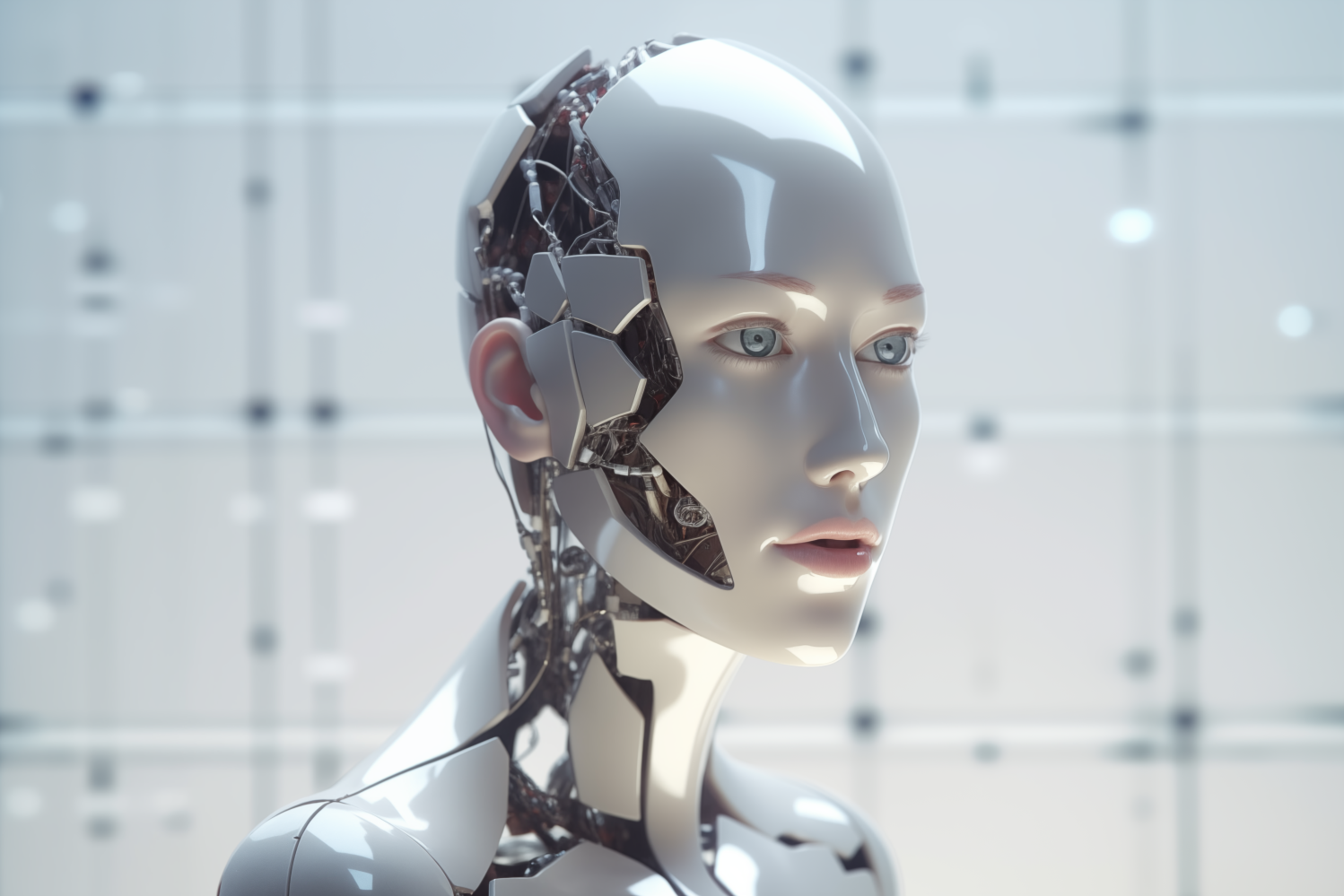
I have just returned from 2024 CES in Las Vegas and am contemplating this new age of AI that we have entered where cars, dishwashers, sleep monitoring devices, cooking grills, and even pet collars boast about their imbedded AI capabilities. Many people have the opinion that AI is nothing more than some fancy programming meshing statistical correlations with output that outwardly seems to make some sense but, in reality, has little intelligence, no self awareness, and no understanding of what it is doing.
I believe that these people are anthropomorphizing AI and discounting it because it does not operate like a human being. AI may not understand the color blue or appreciate music or see the beauty in a rainbow in the same way human beings do, but that does not mean that it “understands” these things any less than we do. In fact, one measure of whether a human being or an AI understands something is how well he/she/they/it can describe that thing fits into our society/universe and predict its future. An AI that sees a rainbow and can correctly determine how humans will view that rainbow and what will happen to that rainbow in the future (dissipation/movement of airborne water droplets, movement of lighting sources, perception from various locations) can be said to have a greater understanding of that rainbow than human beings despite not having to catch its breath in wonder upon seeing a spectacular rainbow.
Should we care whether AI is truly intelligent or just merely a good imitation of intelligence? I believe we should because if we take the latter dismissive attitude towards AI we are less likely to take seriously the risks that AI presents for ourselves and for society as a whole.
AI is going to change our world in dramatic ways. Yes, it has the potential for wiping out all human life, but even if you believe that to be an extremist and unrealistic view held by conspiracy theorists and idiots, AI is going to be a force that we need to reckon with from now on. Initially, AI is going to present lots of really interesting and exciting products and services. Consider this list, courtesy of Chat GPT:
- Autonomous Vehicles: Improved safety and reduced traffic accidents.
- AI in Healthcare: Enhanced diagnosis and personalized medicine.
- Smart Cities: Efficient energy use and improved urban planning.
- Robotics in Manufacturing: Increased efficiency and lower production costs.
- AI in Education: Personalized learning experiences and accessibility.
- Financial Services Automation: Better fraud detection and financial advice.
- Smart Home Devices: Improved home efficiency and security.
- Language Translation Services: Easier cross-cultural communication.
- Retail Personalization: Enhanced shopping experiences.
- AI in Agriculture: Increased crop yields and sustainable practices.
- Environmental Monitoring: Better climate change prediction and resource management.
- Personal Assistants: Improved daily productivity and organization.
- AI in Entertainment: Personalized content and new forms of media.
- Telemedicine: Expanded healthcare access.
- Supply Chain Optimization: Efficient logistics and inventory management.
- Elderly Care Robotics: Improved quality of life for seniors.
- Energy Management: Optimized use of renewable resources.
- Predictive Maintenance in Industry: Reduced downtime and maintenance costs.
- AI in Law Enforcement: Improved public safety and crime prevention.
- AI-Enhanced Sex Robots: Potential improvements in sexual health and therapy.
Yet not all that glitters is gold. Chat GPT provides this list of potential trojan horses:
- Job Displacement: Loss of jobs to automation.
- Privacy Erosion: Increased surveillance eroding privacy.
- Bias Amplification: AI perpetuating societal biases.
- Security Vulnerabilities: Risks of AI system hacking.
- Dependency on Technology: Over-reliance on AI.
- Ethical Dilemmas: AI in sensitive decision-making.
- Social Isolation: Reduced human interactions.
- AI in Warfare: Use of AI in weaponry.
- Economic Inequality: Widening economic disparities.
- Unpredictable AI Behavior: AI acting unexpectedly.
- Devaluation of Human Creativity: AI overshadowing human creativity.
- Environmental Impact: AI’s ecological footprint.
- Manipulation and Propaganda: AI in spreading misinformation.
- Healthcare Risks: Over-dependence on AI in health.
- Educational Disruption: AI impacting learning diversity.
- Erosion of Human Judgment: Trust issues in human decision-making.
- Cultural Homogenization: Loss of diverse cultural expressions.
- Misaligned AI Goals: AI developed with unsuitable objectives.
- Control and Autonomy Issues: Concerns over AI control.
- Armed Conflict Potential: Including civil unrest and revolutions due to socio-economic impacts of AI.
Another way to look at AI is that it commoditizes intelligence. When I was young, I thought of myself as being smarter than average–I think most of us believe we are smarter than average!? Yet, there were always a number of people that were so much smarter than me that I felt stupid around them. As AI advances and becomes increasingly prevalent in our home and society, it seems reasonably likely that this attitude–that we are intellectual invalids in an increasingly complex society–will proliferate. We will increasingly rely upon AI to tell us how and what to do. How will this affect our psyche I don’t know, but I don’t think it will be good.
As we enjoy the benefits of AI, it is important to understand that it comes with a cost and the potential to cause great harm. The next time you use an AI tool or game or service or product that helps you in your job, brings joy to your day or just makes your life easier, please consider at what cost it comes.


 Tick-Tech-Toe